
Korean BBQ in Bangkok: a guide to eating at Hwaro
Hwaro is the Korean griddle BBQ brand of The Bibimbab Co., Ltd., with four mall branches in Bangkok and Nonthaburi. Meat cooks on a cast-iron griddle at the table, served with wrapping vegetables, kimchi and refillable side dishes.
Written by The Bibimbab Co., Ltd. · Bangkok · Updated
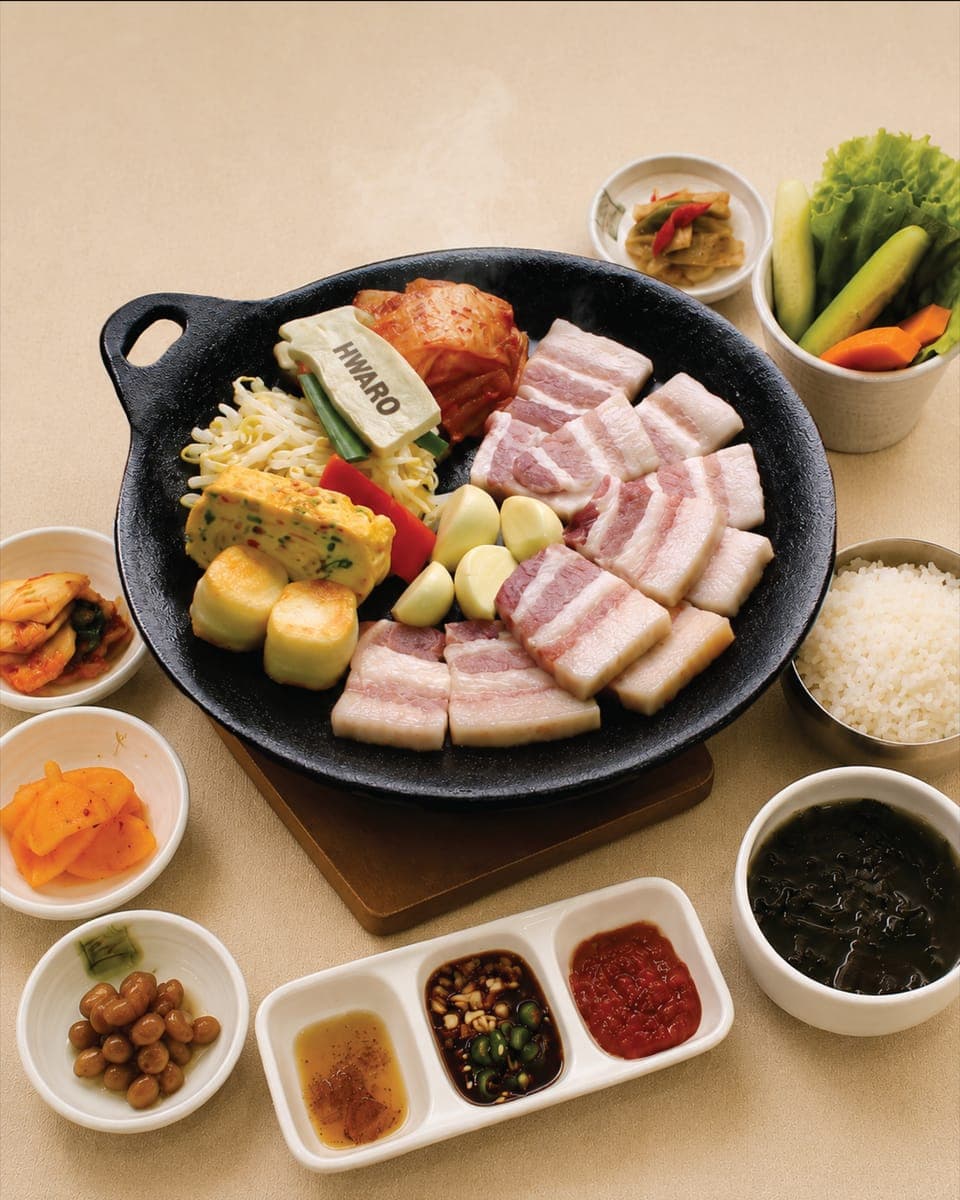
How does the meal work, step by step?
Five steps to enjoying your meal.
- 01
Heat the griddle
The cast-iron griddle is heated on the table stove before the food goes on, so the meat begins to sear on contact.
- 02
Add the meat
Samgyeopsal, or pork belly, and moksal, or pork neck, are the signature cuts. Garlic and kimchi cook alongside them in the rendered fat.
- 03
Add vegetables and banchan
Wrapping vegetables and banchan arrive beside the griddle. Ask the team when you would like a refill.
- 04
Make a wrap
Place cooked meat on a leaf, add a little kimchi or sauce, then fold it into a bite-sized wrap.
- 05
Enjoy rice or noodles
Check each set's menu listing for its rice, noodles and side dishes. In Korea, a BBQ meal often finishes with rice or noodles.
What is Korean griddle BBQ?
Hwaro Hwaro takes its name from the small brazier once placed at the centre of a Korean family table. It uses a shallow cast-iron griddle, where garlic and kimchi cook in the fat released by the pork.
Meat and accompaniments cook on the same hot surface. Fresh wrapping vegetables, kimchi and refillable banchan complete the Korean BBQ meal.
Who cooks the meat, guests or staff?
Guests cook at the table, with the team helping to start the griddle and turn the first pieces. Staff can also change the griddle when needed. Ask if you are unsure whether the meat is ready.
What comes with the meat?
Wrapping vegetables and banchan are served with the meat and can be refilled. Use the leaves for wraps and enjoy the side dishes throughout the meal.
Where are the four Hwaro branches?
All four branches are inside shopping malls, with access to mall transport connections and parking. Each branch takes calls directly.
- Central Ladprao4th floor, Chatuchak, Bangkok093-036-8282
- The Mall NgamwongwanGround floor, Ngamwongwan, Nonthaburi064-741-8282
- Central Pinklao5th floor, Pinklao, Bangkok063-058-8282
- The Mall BangkapiGround floor, Bangkapi, Bangkok064-785-8282
The Hwaro brand page lists its branches. The locations page covers every branch in the group.
Is it suitable for a group?
The griddle sits in the middle of the table for a shared meal. For a large booking, call 06-3935-8282 or contact the branch directly.
How is Hwaro different from The Bibimbab?
Both brands belong to The Bibimbab Co., Ltd. The Bibimbab began in Bangkok in 2010 and serves dolsot bibimbab, soups and Korean home cooking across Thailand. Hwaro centres on meat grilled at the table. Visit The Bibimbab for stone-bowl dishes, or read our dolsot guide for how to eat them.